

Lindsey Graham Dies at 71: The End of a Defining Republican Voice in American Politics
Lindsey Graham dies at 71 after a sudden illness, ending a two-decade Senate career marked by foreign policy influence, Trump alliance, and Republican leadership.

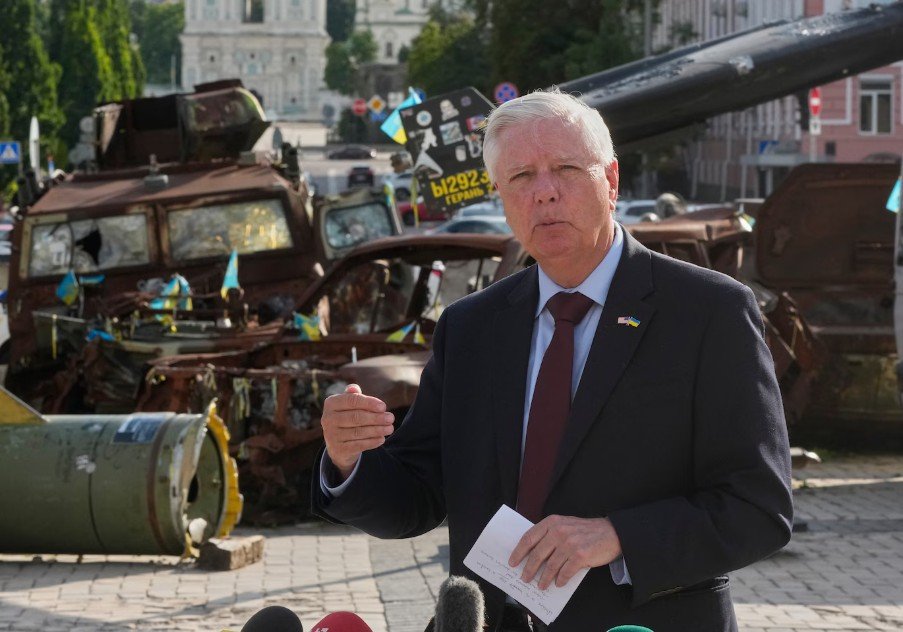
The death of U.S. Senator Lindsey Graham at the age of 71 marks the close of one of the longest and most influential careers in modern Republican politics. For more than two decades in the Senate, Graham helped shape debates on national security, judicial appointments, military policy, and America's role overseas. His office announced that he died following a brief and sudden illness, though no additional details about the cause were released.
His passing comes at a pivotal moment in Washington. Graham had recently been campaigning for another Senate term and remained an active figure in foreign policy discussions until his final days. His absence leaves not only a vacant Senate seat but also a noticeable gap within the Republican Party, where he often served as both a strategist and one of its most recognizable voices.
A Political Career That Spanned Three Decades
Lindsey Graham's rise in politics began in South Carolina, where he first served in the state legislature before winning election to the U.S. House of Representatives in the mid-1990s. In 2002, he secured a seat in the U.S. Senate, beginning what would become more than twenty years of service.
Throughout his Senate career, Graham built a reputation as a lawmaker willing to immerse himself in policy details rather than simply deliver political talking points. He served on several high-profile committees, including the Senate Judiciary Committee, where he later became chairman. During his leadership, the committee oversaw contentious judicial confirmation hearings and debates that shaped the federal court system for years to come.
Although he occasionally crossed party lines earlier in his career—particularly on immigration reform—his positions gradually aligned more closely with mainstream Republican priorities.
From Trump Critic to Trusted Ally
One of the most remarkable chapters of Graham's political journey was his changing relationship with Donald Trump.
During the 2016 Republican presidential primary, Graham openly criticized Trump, questioning both his leadership style and his fitness for office. At the time, few observers would have predicted that the two men would later become close political partners.
Politics, however, often rewards pragmatism over permanence.
After Trump entered the White House, Graham emerged as one of the administration's strongest defenders in Congress. He backed many of Trump's judicial nominees, supported his foreign policy agenda on several major issues, and became a regular presence defending Republican priorities during television interviews and Senate debates.
That alliance remained intact through multiple election cycles and continued into Trump's return to national leadership.
Following news of Graham's death, Trump described him as "a true American patriot" and praised his dedication to public service.
A Senator Defined by Foreign Policy
Many senators become known for local issues or domestic legislation. Graham earned his reputation largely through foreign affairs.
His military background and long-standing interest in national security influenced nearly every stage of his Senate career. He consistently argued that American leadership abroad was necessary to deter adversaries and protect U.S. interests.
Over the years, Graham became one of Congress's strongest advocates for:
- Increased defense spending
- Strong military alliances
- Support for Israel
- Assistance to Ukraine
- Tough sanctions against Russia and Iran
Even critics acknowledged that foreign policy remained one of his defining strengths. He frequently traveled overseas to meet allied leaders and assess international conflicts firsthand rather than relying solely on intelligence briefings.
Supporters viewed him as a consistent voice for American global leadership.
Opponents argued that he often favored military intervention when diplomacy deserved greater attention.
Those competing perspectives followed him throughout his Senate career.
The Influence of John McCain
Any discussion of Lindsey Graham's legacy inevitably includes the late Senator John McCain.
The two Republicans developed one of the closest friendships in Congress. Along with former Senator Joe Lieberman, they frequently appeared together while advocating interventionist foreign policy positions during conflicts in Iraq, Afghanistan, Libya, and elsewhere.
Following McCain's death, Graham inherited much of the role his longtime friend had occupied within Senate foreign policy debates.
Although their political philosophies were not identical, Graham often described McCain as both a mentor and close personal friend.
Leadership Beyond Headlines
While television appearances made Graham one of Washington's most recognizable senators, much of his influence happened behind closed doors.
Committee chairs rarely attract public attention unless controversy erupts. Graham, however, managed both legislative work and public messaging with unusual visibility.
His work included:
- Judicial confirmation hearings
- Federal budget negotiations
- National security legislation
- Oversight of executive branch actions
- Immigration discussions
Political observers frequently noted that Graham understood Senate procedure exceptionally well, allowing him to influence legislation even when he was not the public face of a particular bill.
That institutional knowledge is difficult to replace.
What Happens Next?
Graham's death creates immediate political and constitutional questions for South Carolina.
The state will now begin the legal process required to fill his Senate seat, though the exact timeline depends on state election law and decisions by state officials. Because Graham had already been campaigning for another term, political parties will also need to determine how upcoming elections proceed.
Beyond logistics, Republicans lose one of their most experienced Senate strategists.
Leadership transitions in Congress rarely depend on one individual alone, but senior lawmakers often serve as informal advisers whose influence extends beyond committee assignments or leadership titles.
Reactions Across Washington
Tributes quickly arrived from colleagues, political allies, and international leaders.
Many praised Graham's work ethic, willingness to engage difficult policy questions, and decades of public service. Even lawmakers who disagreed with his positions frequently acknowledged his command of legislative detail and his commitment to representing South Carolina.
His office requested privacy for his family while declining to release further information about the illness that led to his death.
Assessing Lindsey Graham's Legacy
Political legacies rarely fit into simple categories.
Supporters will remember Graham as a senator who defended America's allies, strengthened the military, and played an important role in reshaping the federal judiciary.
Critics will point to his evolving political alliances, support for military interventions, and willingness to shift positions as the Republican Party changed over time.
Both perspectives are part of the historical record.
Few would dispute, however, that Graham remained one of the Republican Party's most influential senators for more than twenty years. Whether speaking from the Senate floor, questioning Supreme Court nominees, or debating U.S. foreign policy on national television, he maintained a level of visibility that few lawmakers achieve.
Conclusion
Lindsey Graham's death closes a chapter that spanned decades of American politics. His career reflected both the continuity and transformation of the modern Republican Party—from the post-Cold War era through the rise of Donald Trump and into today's increasingly polarized political environment.
For South Carolina, his passing ends the tenure of a senator who represented the state in Washington for more than two decades. For Congress, it removes a seasoned legislator whose influence reached well beyond committee rooms.
As tributes continue and attention turns to filling his seat, Graham's record will remain part of ongoing debates about U.S. foreign policy, judicial appointments, and the direction of the Republican Party for years to come.
What's Your Reaction?
 Like
0
Like
0
 Dislike
0
Dislike
0
 Love
0
Love
0
 Funny
0
Funny
0
 Wow
0
Wow
0
 Sad
0
Sad
0
 Angry
0
Angry
0




Comments (0)